![[Translate to English:]](/storages/zentraler_bilderpool/_processed_/e/6/csm_Kopfbild-Mathetower_f524f7b740.jpg "[Translate to English:]")
Focusing on How to Handle Artificial Intelligence
- Artificial Intelligence
- Top News
- Studying & Teaching at TU Dortmund University

Generative AI is changing not only teaching and learning processes but also the demands placed on future graduates. Alongside subject-specific skills, a critical and reflective approach to AI systems, the contextualization of AI-generated content, and the consideration of ethical, legal, and societal questions are becoming increasingly important. TU Dortmund University pursues the goal of preparing students for a responsible and reflective approach to AI and enabling them to use the corresponding tools competently.
University-Wide Exchange
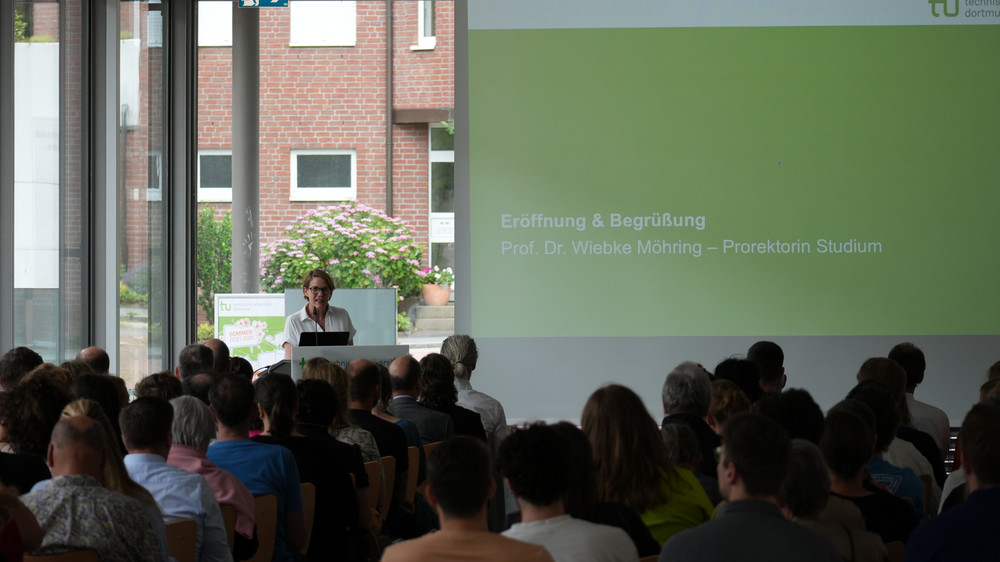
How these developments are concretely changing university teaching was the focus of the event in the Rudolf Chaudoire Pavilion. Around 100 lecturers and other interested members from all 17 departments as well as the central scientific units came together to put current developments into context, share experiences, and learn about practical examples.
Professor Wiebke Möhring, Vice President Academic Affairs, was delighted by the strong response: “This shows that the lecturers at TU Dortmund University are aware that artificial intelligence brings challenges for studying and teaching, and that they are happy to rise to them with the goal of enabling good teaching and a high-quality education.”
In his keynote, Professor Malte Persike, Academic Director of the Center for Teaching and Learning Services (CLS) at RWTH Aachen University, spoke about AI in examinations, current regulations, and new forms of teaching, learning, and examining. In addition, short presentations shed light on technical, organizational, and didactic questions surrounding the use of AI at TU Dortmund University.
Award-Winning Practical Examples
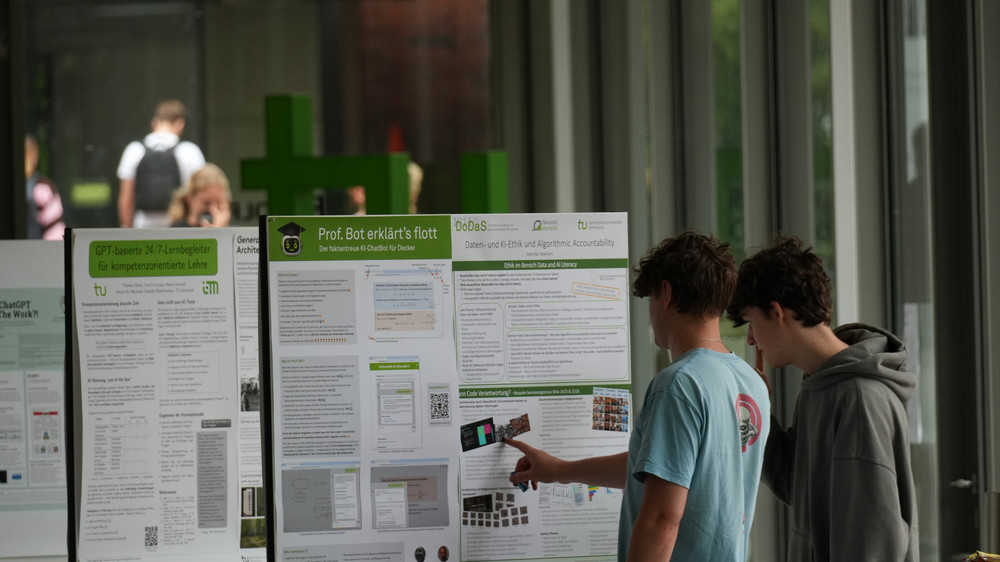
In a poster gallery, TU lecturers presented various ideas, concepts, and practical examples of the use of AI in teaching. These ranged from supporting individual learning processes and further developing task formats to reflecting on existing examination formats.
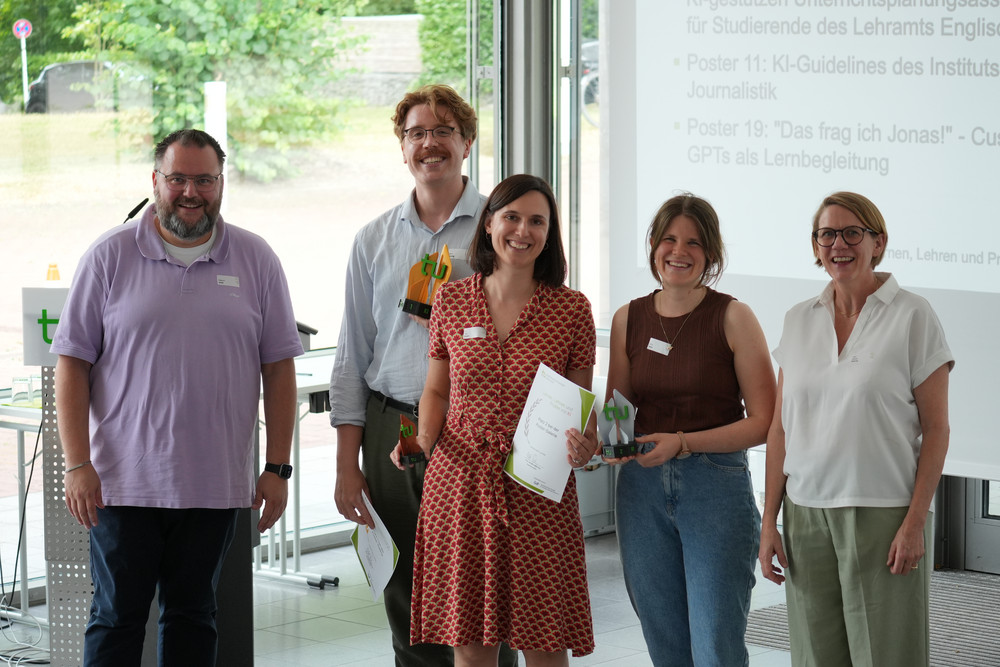
Visitors were able to choose the best contributions in a live vote. The winners were awarded prize money by the Association of Friends of TU Dortmund University (GdF). First place went to the “AI Guidelines for Teaching and Studying” of the Institute of Journalism. Second place is shared by Dr. Inga Püster with the project “Development and Testing of an AI-Based Assistant for Planning Cooperative English Lessons” and Tanja Nebel with the contribution “‘I’ll Ask Jonas!’ – Custom GPTs as Dialogic Learning Companions in the Serious Slow Game Jam.”
Updated Guide
As early as 2023, TU Dortmund University published an initial orientation guide on handling generative AI in university teaching. The newly available, comprehensively revised version takes into account the numerous developments of recent years and supplements the previous recommendations with, among other things, concrete usage scenarios as well as guidance on didactic and examination-related questions.
The handout is aimed at lecturers, students, and staff and is at the same time intended as a basis for the continued university-wide exchange on the responsible use of generative AI. President Professor Manfred Bayer emphasizes: “We at TU Dortmund University maintain our position based on the premise that blanket AI bans in studying and teaching are neither effective nor in keeping with the times. Our students’ development of the skills needed to apply and generate knowledge in a critical and reflective manner also encompasses AI Literacy.”
With its Strategy for the Digitalization of Studies and Teaching, TU Dortmund University has already highlighted the importance of artificial intelligence at the end of 2024 and defined a dedicated field of action for it. The establishment of the professorship “AI in Higher Education,” for which the appointment process is currently underway, represents a further important step toward firmly anchoring this subject area in research and teaching as well.
Contact persons for inquiries: