
Initiating Change
For us, successful knowledge transfer also involves engaging with citizens and the urban community – as research has the greatest impact on society when everyone works together.
To support transformation processes, TU Dortmund University maintains close contact with various stakeholders in (urban) society. After all, universities cannot solve societal challenges on their own. Thanks to strong networks, we provide impulses – and bring everyone along with us: This way, citizens experience science right in the heart of their city. And they play a part in the change that cutting-edge research can bring about.
Social Research Center: Innovation for Society

The Social Research Center Dortmund (sfs) is one of the leading institutions in innovation and labor research. The TU Dortmund University institute investigates how social innovations interact with technological progress and drive societal developments. It works closely with regional partners and actively involves the people in citizen science projects.
Strengthening Democracy through Research Projects

Democracy is a precious social good that seems increasingly under threat: this makes it all the more important to protect and strengthen it. At the “Initiativzentrum für politische Bildung und kommunale Demokratie” (Initiative Center for Political Education and Local Democracy, IZBD) at TU Dortmund University, researchers study politics in local communities and share their expertise with the urban community to promote democracy in Dortmund and beyond. The award-winning long-term study “Journalism and Democracy” by the Institute of Journalism examines how people in Germany view journalism and what expectations they have of it—thereby contributing to the strengthening of democratic structures.
Urban Planning: Making Urban Spaces More Livable
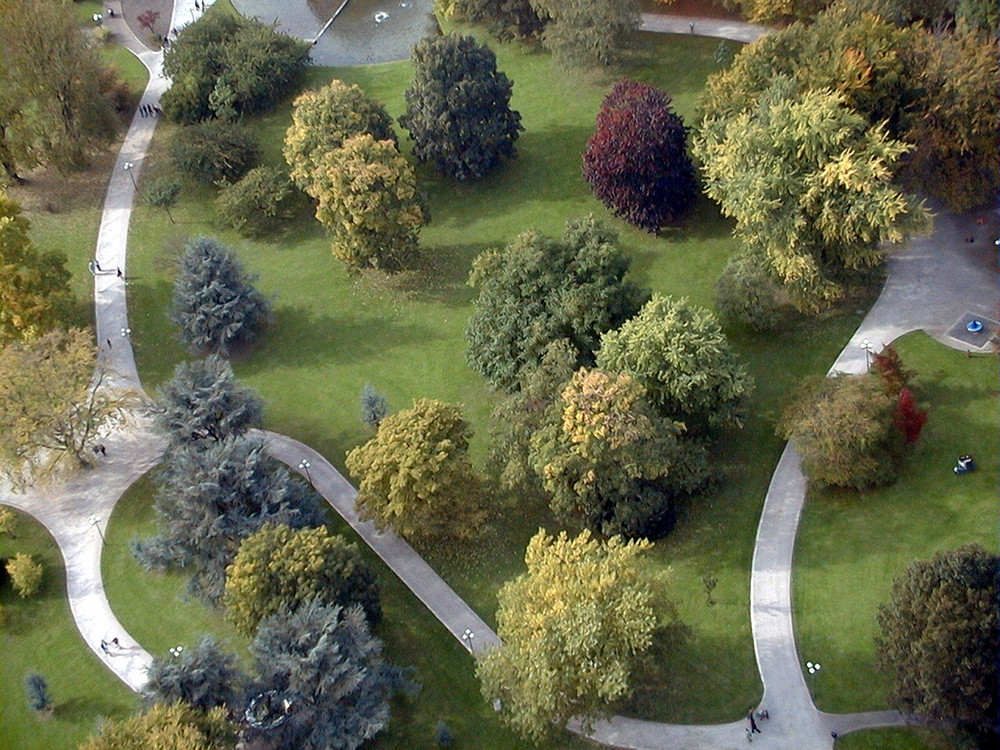
Science in an ivory tower? Not at all: At TU Dortmund University, research is part of society and even shapes living spaces. Students and researchers regularly develop concepts for places and cities that make everyday life more livable for everyone—for example, by preparing urban spaces for the impacts of climate change or revitalizing city center areas. In doing so, they conduct research directly on-site and involve the public in the planning process.
In the City: Experience Culture

TU Dortmund University not only brings knowledge into the city center but also physically opens itself up to the urban community: By moving into the Hansa Carré in the fall of 2026, the university will strengthen its presence in downtown Dortmund, just as it does through various exhibitions that bring technology and art to life. For example, students and researchers create their own installations at the Dortmunder U and the Baukunstarchiv.
HOLO-VOICES: Encounters with Eyewitnesses

Students and researchers also contribute their expertise to the realization of external exhibitions in the region: For HOLO-Voices at the Zollverein coal mine, a team from the institute of journalism developed a questionnaire for interviewing Holocaust survivors. There, visitors can ask holographic representations of the eyewitnesses about their lives and their memories of the National Socialism period.
Let's Talk!

Learn more about current issues shaping the future, gain a better understanding of research, and discuss socially relevant questions: through a variety of event formats, TU Dortmund University invites citizens to experience science firsthand and engage in dialog together.
From the energy transition to artificial intelligence: Three times a year, leading companies in the region shed light on current future-oriented issues in the context of the academic world.
In the lecture series “Initial Spark”, top scientists from around the world share their revolutionary ideas that earned them a Nobel Prize. The series is named in memory of Alfred Nobel, who once conducted experiments at the neighboring Dorstfeld coal mine. The event is open to all interested parties.
At the “Gambrinus Forum” at the Westphalian Industrial Club, renowned researchers give presentations on their work to guests from the research community, industry, and the general public. The goal of this annual event is to strengthen the dialog between science and urban society.
How do young people develop skills for political participation? How can digital teaching succeed? The Center for Research on Education and School Development (IFS)’s program series addresses questions like these. It is aimed at multipliers from educational practice, administration, and policy and presents findings from current research.
You still want more? For additional events to attend and participate, please check out our event overview.